
What Is a Split Sheet? (And Why You Need One Before Your Next Session)
A plain-English breakdown of split sheets: who needs them, when to create them, and what happens when you skip this step.
The short version
- A split sheet records who owns what percentage of a song, signed by every contributor.
- Create it during or immediately after the session, before anyone leaves the room.
- Without one, PROs can freeze royalties and the law may assume equal ownership.
- List names, contributions, PRO info, and percentages that total 100%.
You just finished the best studio session of your life. The beat was fire, the hook landed perfectly, and everyone in the room knows you've got something special. But here's the question nobody wants to ask in the moment: who owns what?
That question, awkward as it might feel, is the single most important conversation you'll have about any song you create with other people. And the document that answers it is called a split sheet.
So What Exactly Is a Split Sheet?
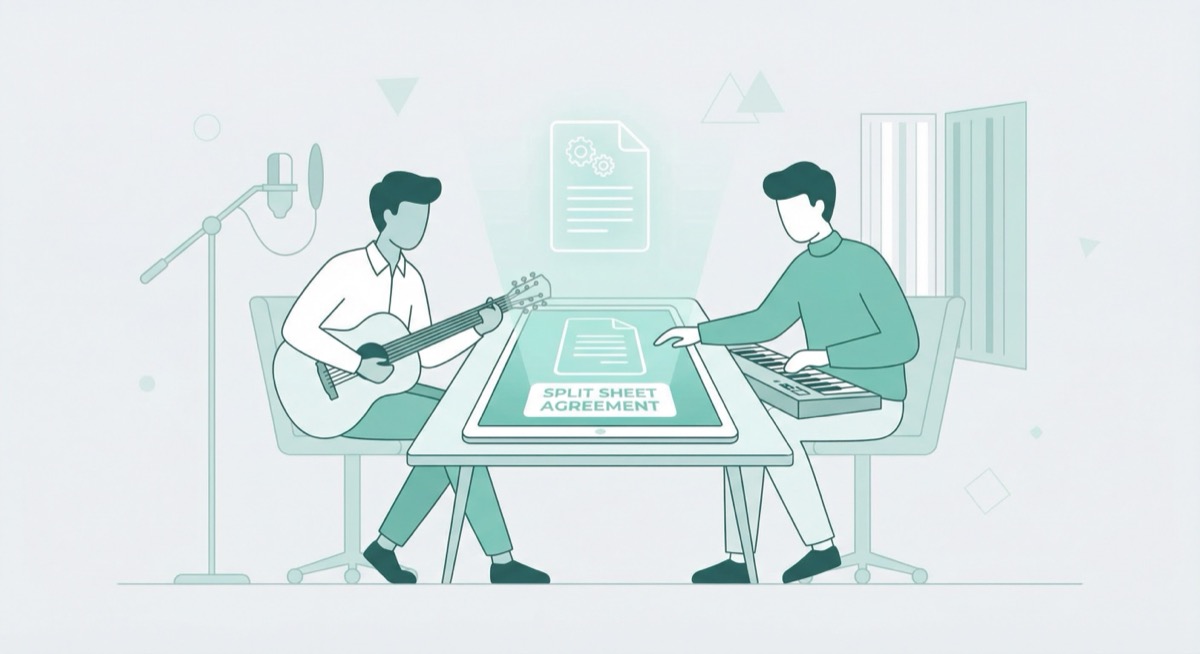
A split sheet is a written agreement that documents the ownership percentages of a song. It identifies every contributor (songwriters, producers, featured artists, anyone who had a creative hand in the track) and spells out exactly how much of the song each person owns.
Think of it like a receipt for creative contributions. If you wrote the lyrics and your producer made the beat, the split sheet records that. If three writers collaborated on the melody, it captures each person's share. The total always adds up to 100%.
A proper split sheet typically includes:
- Song title and date of creation
- Full legal names and contact info for every contributor
- Ownership percentages for each person (must total 100%)
- Description of contributions (lyrics, melody, production, etc.)
- PRO affiliations (ASCAP, BMI, SESAC) for each contributor
- Publisher information if applicable
- Signatures from all parties
Why Does This Actually Matter?
Here's the uncomfortable truth: without a signed split sheet, you're gambling with your income. And it's not a small gamble.
Frozen Royalties
When you register a song with your PRO (performing rights organization like ASCAP or BMI), they need to know who owns what. If two contributors register the same song with different ownership claims, the PRO will freeze all royalty payments until the dispute is resolved. That means nobody gets paid, sometimes for months or even years.
According to Symphonic Distribution, this is one of the most common reasons independent artists lose money: not because the money isn't there, but because nobody documented who it belongs to.
Legal Assumptions You Don't Want
In the absence of a written agreement, copyright law may assume equal ownership among all contributors, regardless of who actually did what. So if you wrote the entire song and your friend added one ad-lib, the law might treat you as 50/50 owners. That's probably not what either of you intended, and it can lead to serious conflicts down the road.
Sync and Licensing Opportunities Lost
When a music supervisor wants to place your track in a TV show, film, or commercial, one of the first things they need is clear ownership documentation. If you can't prove who owns the song and that all parties have agreed, the supervisor will simply move on to the next track. There are too many options and too little time to deal with unclear rights.
When Should You Create a Split Sheet?
The short answer: during or immediately after the session. This is critical. Don't wait until the song blows up, don't wait until it's time to register with your PRO, and definitely don't wait until money is on the table. By then, memories fade and everyone remembers their contribution a little differently.
Pro tip: Make it a habit. Treat the split sheet like the last step of every session, just like saving your project file. Five minutes of documentation now can save months of headaches later.
How Do You Determine the Splits?
There's no universal formula for this. It depends on the contributors and the situation. But here are some common approaches:
Equal Splits
Some artists and producers default to splitting everything equally among everyone in the room. It's simple and avoids arguments, but it may not feel fair if one person contributed significantly more than others.
Contribution-Based Splits
Many professionals break the song into components (lyrics, melody, production, arrangement) and assign percentages based on each person's actual contribution. For example: the producer who created the beat might get 50% while two lyricists split the other 50%.
Pre-Agreed Frameworks
Some teams agree in advance on how splits will work. A producer might always take 50% of production credits, regardless of the song. This removes the negotiation from each individual session and keeps things moving.
Whatever method you choose, the key is to have the conversation before anyone leaves the studio.
What About Producers Who Sell Beats?
If you're a producer selling beats online, whether through exclusive sales, non-exclusive licenses, or lease agreements, split sheets are equally important. Each transaction should include documentation of what rights are being transferred, what royalty percentages the producer retains, and what the purchasing artist can and can't do with the beat.
A beat lease is not the same as a full buyout, and your split sheet should reflect that difference clearly. Many producers who skip this step end up in disputes when a song made on a leased beat takes off and suddenly everyone wants a bigger piece.
Common Mistakes to Avoid
- Waiting too long. The number one mistake. Do it while everyone's still in the room and the contributions are fresh.
- Verbal agreements only. "We'll figure it out later" is the most expensive sentence in the music business. Always get it in writing.
- Forgetting contributors. That friend who wrote the bridge? The engineer who contributed the hook melody? If they contributed creatively, they need to be on the sheet.
- Not including PRO information. Without each contributor's PRO affiliation and IPI number, the royalty organizations can't route payments correctly.
- Unclear descriptions. "Helped with the song" isn't specific enough. Document exactly what each person contributed: lyrics, melody, beat, arrangement, etc.
Frequently Asked Questions
Can we change the splits after the song is released?
Yes, as long as every contributor agrees. Update the split sheet, have everyone sign the revised version, and correct the song's registration with each contributor's PRO so future royalties follow the new percentages.
What happens if a split sheet never gets signed?
An unsigned split sheet is weak protection. If contributors later disagree, PROs can freeze royalty payments until the dispute is resolved, and copyright law may assume equal ownership regardless of who did what. Get signatures while the contributions are fresh.
Do I need a split sheet if I bought the beat?
Yes. A beat lease is not the same as a full buyout, and the paperwork should spell out exactly what rights transferred, what royalty percentage the producer keeps, and what you can do with the track.
The Bottom Line
A split sheet isn't just paperwork. It's the foundation of every dollar you'll earn from a collaborative song. Performance royalties, mechanical royalties, sync licensing fees, sample clearances: all of it flows from the ownership percentages documented in your split sheet.
The good news? Creating one doesn't have to be complicated. Tools like SyncFlow let you build professional, legally-binding split sheets in under five minutes, right from your phone or laptop. No legal jargon, no confusion. Just clear documentation that protects everyone involved.
Make it a habit. Your future self (and your future bank account) will thank you.
Sources: Symphonic Distribution, Songtrust, Soundcharts, Zach Bornheimer Music
Put your next song on paper.
SyncFlow turns splits, signatures, and files into one organized record of who owns what. Cancel anytime.
Start your trial